
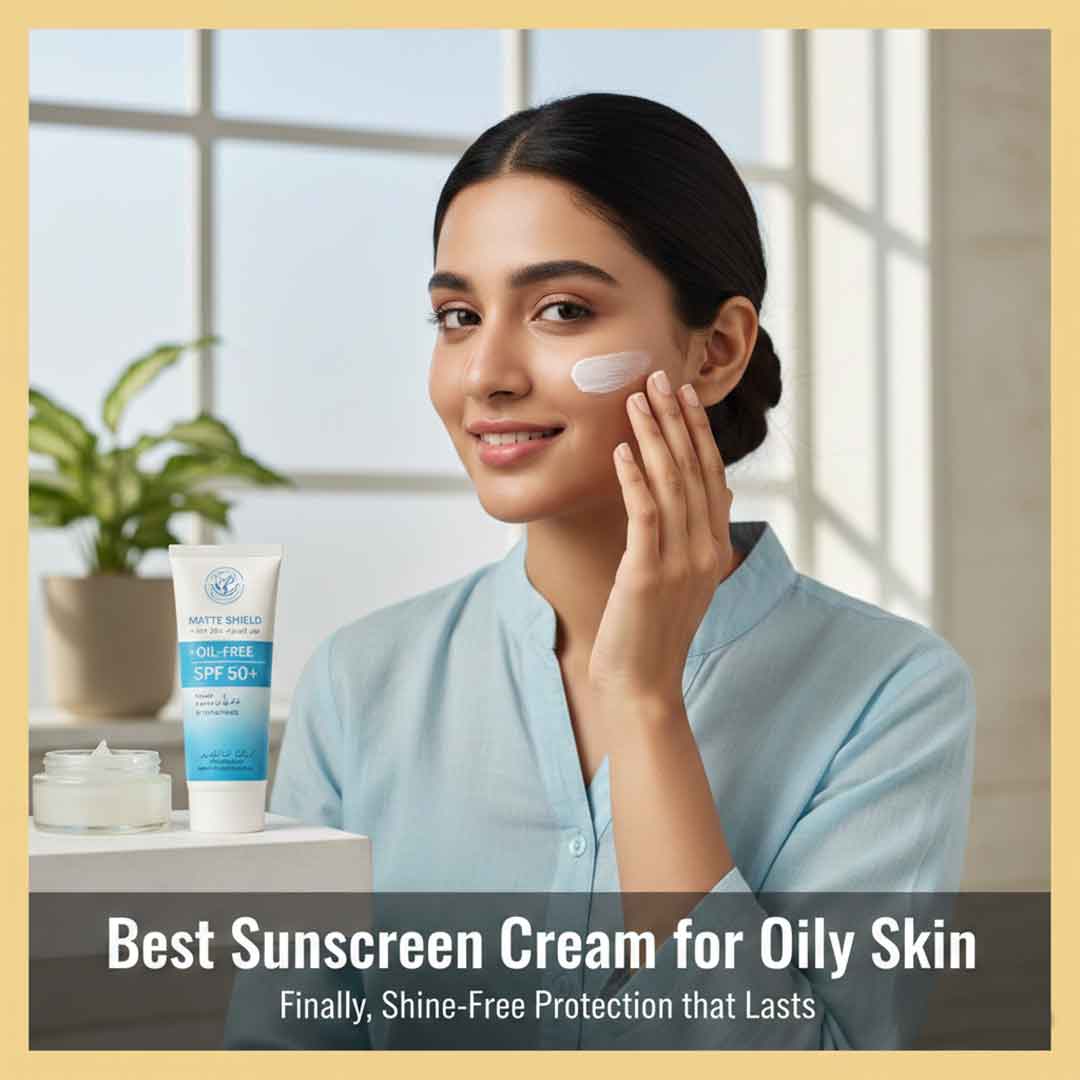
If you have oily skin, you already know the struggle.
You apply sunscreen in the morning…, and by noon your face feels greasy, shiny, and heavy. Makeup starts sliding. Pores look bigger. Sometimes you even get breakouts.
So you might be thinking:
“Do I really need sunscreen if my skin is already oily?”
Yes. You absolutely do.
In fact, oily and acne-prone skin needs sun protection just as much as dry or sensitive skin, maybe even more. This 2026 guide will help you choose the best sunscreen cream for oily skin, without the sticky, greasy mess.
Let’s make this simple and practical.
Why Sunscreen Is Essential for Oily Skin
Many people with oily skin skip sunscreen because they’re afraid it will:
- Make skin shinier
- Clog pores
- Cause acne
- Feel heavy
We understand. That fear is real.
But skipping sunscreen can lead to:
- Dark spots and hyperpigmentation
- Post-acne marks getting darker
- Premature aging (fine lines, wrinkles)
- Sun damage and uneven skin tone
Even if your skin is oily, UV rays still damage it.
ALSO READ
Best Hand and Foot Whitening Cream
The key is not avoiding sunscreen, it’s choosing the right sunscreen for oily skin type.
What to Look for in the Best Sunscreen for Oily Skin (2026 Criteria)
Before we jump into product recommendations, let’s talk about what actually matters.
1. Oil-Free & Non-Comedogenic Formula
Look for labels that say:
- Oil-free
- Non-comedogenic
- Won’t clog pores
This helps reduce breakouts and blackheads.
2. Lightweight, Gel or Fluid Texture
For oily skin, gel sunscreen, water-based sunscreen, or matte finish sunscreen works best.
Avoid:
- Thick creams
- Heavy moisturising sunscreens
- Greasy formulas
3. Broad-Spectrum SPF 30 or Higher
Make sure your sunscreen says:
- Broad-spectrum
- SPF 30, SPF 50, or higher
This protects from both UVA and UVB rays.
4. Matte or Shine-Control Finish
Some modern sunscreens include:
- Oil-control technology
- Sebum-absorbing ingredients
- Mattifying effect
If you hate midday shine, this is important.
Best Sunscreen Creams for Oily Skin in 2026
Here are some dermatologist-recommended and popular options known for working well on oily and acne-prone skin.
1. La Roche-Posay Anthelios Clear Skin SPF 60
La Roche-Posay Anthelios Clear Skin SPF 60
Best for: Acne-prone and very oily skin
Why people love it:
- Oil-absorbing technology
- Matte finish
- Lightweight texture
- High SPF 60 protection
It feels dry to the touch, not sticky. If your skin gets shiny within 2-3 hours, this could be a strong option.
2. Neutrogena Hydro Boost Water Gel SPF 50
Neutrogena Hydro Boost Water Gel SPF 50
Best for: Oily + dehydrated skin
This one feels like a light gel moisturiser.
Benefits:
- Water-based formula
- Absorbs quickly
- Non-greasy finish
- Comfortable under makeup
If your skin feels oily but tight at the same time, this can be a great balance.
3. Bioderma Photoderm AKN Mat SPF 30
Bioderma Photoderm AKN Mat SPF 30
Best for: Acne-prone and sensitive oily skin
Why it stands out:
- Controls excess oil
- Helps reduce breakouts
- Mattifying effect
- Lightweight cream texture
If you struggle with frequent pimples, this sunscreen is designed specifically for acne-prone skin.
4. EltaMD UV Clear Broad-Spectrum SPF 46
EltaMD UV Clear Broad-Spectrum SPF 46
Best for: Sensitive, acne-prone skin
Key features:
- Lightweight formula
- Contains niacinamide
- Calms redness
- Non-comedogenic
If your skin reacts easily to products, this one is often dermatologist-recommended.
5. Minimalist SPF 50 PA++++ Sunscreen (Budget-Friendly Option)
Minimalist SPF 50 PA++++ Sunscreen
Best for: Affordable daily use
Benefits:
- Lightweight texture
- No white cast
- Good for humid weather
- Suitable for oily skin
If you’re looking for a daily sunscreen that won’t break the bank, this is worth considering.
How to Apply Sunscreen on Oily Skin (Without Looking Greasy)
Even the best sunscreen can feel heavy if applied incorrectly.
Here’s what works:
- Cleanse your face.
- Use a lightweight, oil-free moisturiser (optional if sunscreen is hydrating).
- Apply 2 finger-length amount of sunscreen.
- Wait 2-3 minutes before makeup.
- Reapply every 2-3 hours if outdoors.
Pro tip: If you’re very oily, you can blot your face lightly before reapplying.
Common Mistakes People with Oily Skin Make
Be honest, have you done any of these?
- Skipping sunscreen completely
- Using body sunscreen on your face
- Using thick cream meant for dry skin
- Applying too little
- Not reapplying
Small changes can make a big difference.
Mineral vs Chemical Sunscreen for Oily Skin – Which Is Better?
This depends on your skin sensitivity.
Mineral sunscreen (zinc oxide, titanium dioxide):
- Good for sensitive skin
- Less irritation
- Can sometimes leave a white cast
Chemical sunscreen:
- Lightweight
- Blends easily
- Often better under makeup
If your skin breaks out easily, you may need to test both and see which works better for you.
ALSO READ
Cleanser vs Face Wash: What’s the Real Difference
If you’ve been avoiding sunscreen because of oiliness or acne, we truly get it.
But the solution isn’t skipping sunscreen, it’s choosing smarter.
The best sunscreen cream for oily skin in 2026 is:
- Lightweight
- Oil-free
- Non-comedogenic
- Matte finish
- Broad-spectrum SPF 30 or higher
Your skin deserves protection without feeling heavy.
Now, tell us what’s your biggest sunscreen struggle is?
Is it shining? Breakouts? White cast?
Once you identify the problem, choosing the right sunscreen becomes much easier.
FAQs
Gel-based, water-based, or matte-finish sunscreen with SPF 30+ is best for oily skin. Look for oil-free and non-comedogenic formulas.
Yes, if it’s heavy, greasy, or pore-clogging. Choose a lightweight, non-comedogenic sunscreen to reduce breakouts.
No. SPF 50 is safe and provides better protection, especially if you are outdoors frequently.
Not necessarily. If your sunscreen is hydrating, you can skip moisturiser. Otherwise, use a light, oil-free moisturiser underneath.
Every 2-3 hours if exposed to sunlight. If you’re indoors all day, once in the morning may be enough.
